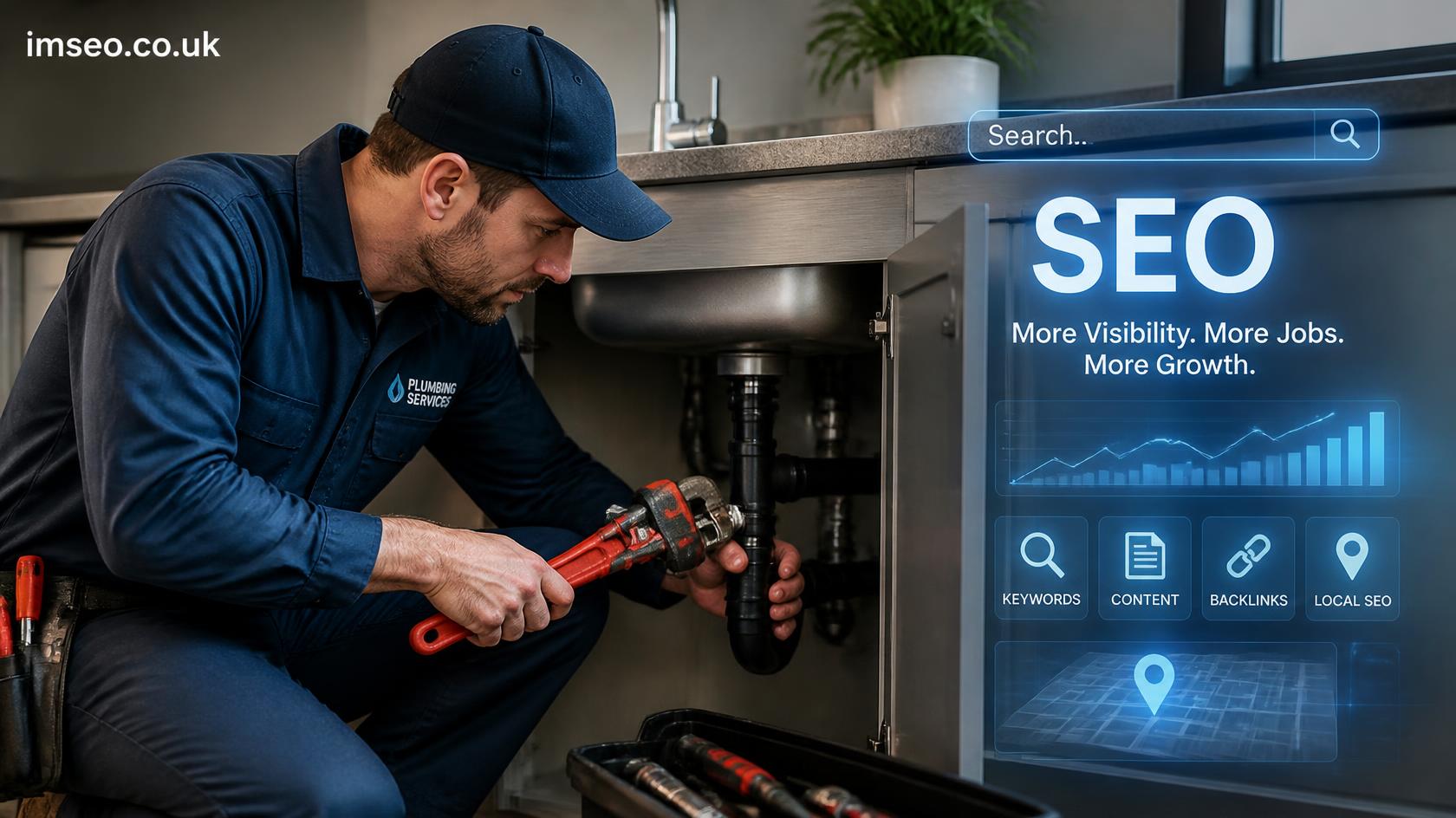
SEO for Plumbers: A Practical Guide
A burst pipe doesn’t leave much room for research. When water is spreading across a kitchen floor, most people search “emergency plumber near me” and call the first credible result they see — usually within minutes. For plumbing businesses, that makes SEO less of a marketing nicety and more of a direct line to jobs that would otherwise go to whichever competitor happens to rank higher.
Two Very Different Customer Journeys
Plumbing searches fall into two distinct categories that need different content strategies. Emergency searches — burst pipes, blocked drains, no hot water — are urgent, local, and decided within minutes. Planned searches — bathroom renovations, boiler installations, general maintenance — involve more research, comparison, and time before a decision is made.
A site built only around “emergency plumber” content misses the planned-work searches, and vice versa. Both deserve dedicated pages, because the searcher’s mindset — and what convinces them to call — is genuinely different in each case.
Winning the Local Pack
For emergency-intent searches especially, the local map pack tends to capture the majority of clicks. A complete Google Business Profile — accurate opening hours (including whether you offer 24/7 emergency callouts), service area, and photos of real jobs — combined with a steady flow of recent reviews, is usually the single highest-impact piece of plumbing SEO.
Response speed matters here too: profiles that show quick response to reviews and messages tend to build more trust with searchers scanning multiple options quickly.
Structuring Service Pages Properly
Rather than one broad “plumbing services” page, dedicated pages for each core service — blocked drains, boiler repair, bathroom installation, leak detection — allow each page to target its own specific search terms in depth. This also gives Google clearer signals about exactly what the business does, which tends to improve rankings across the board.
Local Service Area Pages
For plumbers covering multiple towns, individual pages for each significant service area — genuinely written for that area, not duplicated with the town name changed — help capture “plumber in [town]” searches that a single generic page would struggle to rank for.
Content Built Around Real Questions
Searches like “why is my boiler making noise” or “how much does it cost to fix a blocked drain” represent people trying to understand a problem before deciding whether to call someone. Answering these clearly, with genuinely useful detail, builds trust — and often, the reader who was originally just researching ends up booking a callout once they realise the problem is beyond a DIY fix.
Reviews as an Ongoing SEO Asset
For emergency trades, review recency matters almost as much as review volume. A simple habit of asking satisfied customers for a review right after a completed job keeps the profile looking active and trustworthy, which directly supports local pack visibility.
The Technical Side
Plumbing websites are often built for a quick launch and then left untouched. Slow load times, broken contact forms, and poor mobile usability all quietly cost enquiries — especially since emergency searches happen overwhelmingly on mobile, often with someone standing in a flooding kitchen who won’t wait for a slow site to load.
Where to Start
For most plumbing businesses, the fastest path to more calls is a fully optimised Google Business Profile combined with distinct emergency and planned-service pages. Once that foundation is solid, expanding into location pages and problem-focused content compounds the results over time.
Related Reading

Related Posts

SEO for Commercial Real Estate: A Practical Guide

SEO for Restaurants: A Practical Guide