What Is SEO? A Complete Beginner’s Guide
Type almost any question into Google and you’ll get an answer in under a second. Behind that speed sits a quiet, constant contest: millions of websites competing for a handful of spots on page one. SEO is how you win a place in that contest without paying for it.
If you’ve ever wondered what SEO actually means beyond the buzzword, or why some businesses seem to show up everywhere on Google while others are invisible, this guide walks through it properly — no jargon left unexplained.
What Does SEO Stand For?
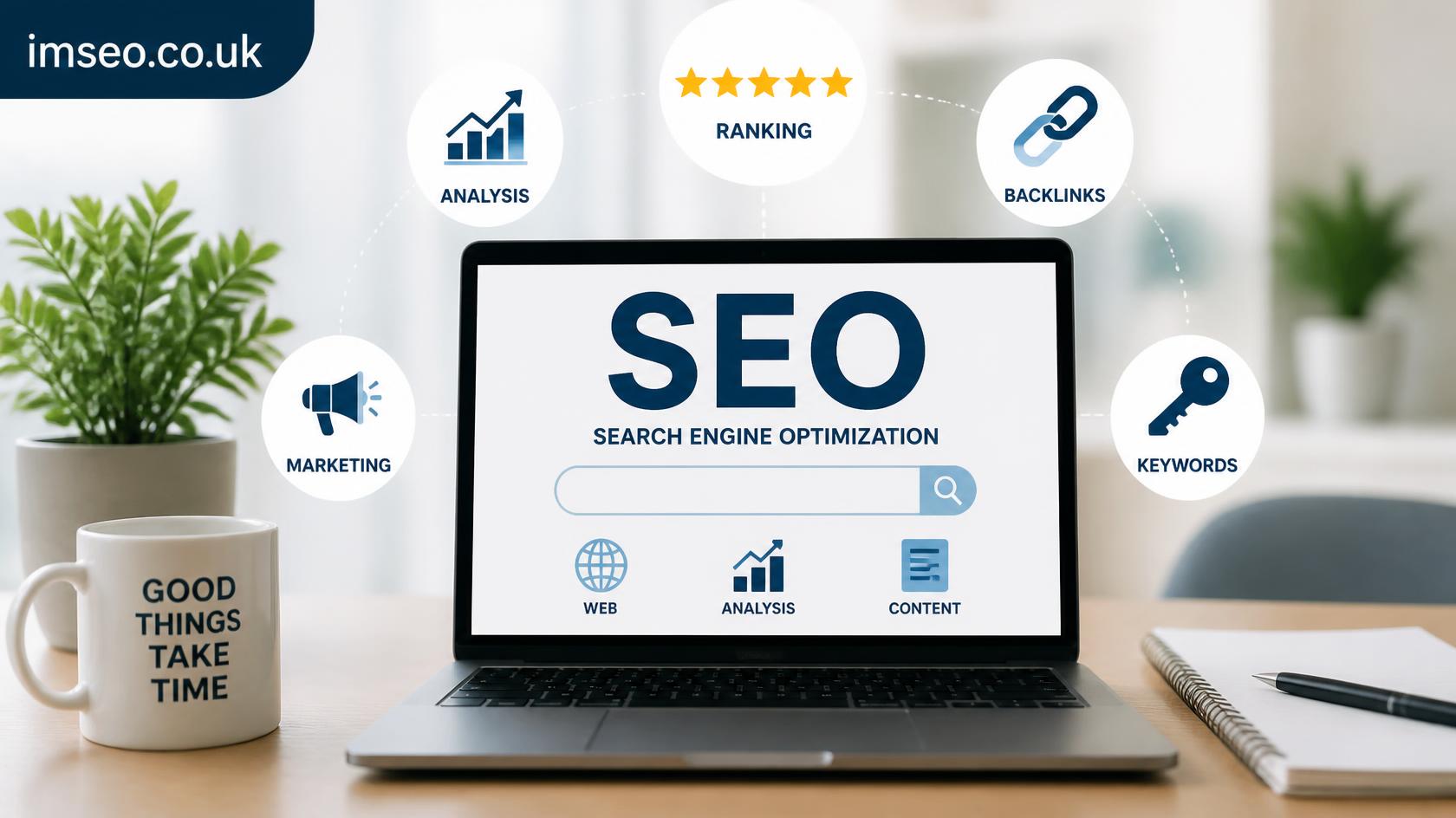
SEO stands for search engine optimization. Strip away the acronym and it’s really just this: shaping a website so that search engines like Google can understand it, trust it, and show it to the right people at the right moment.
It’s easy to confuse SEO with paid advertising, but they’re opposites in an important way. Pay-per-click ads disappear the moment you stop paying. Organic rankings, the ones SEO earns, keep bringing in visitors long after the work is done — which is exactly why so many businesses treat it as a long-term investment rather than a monthly expense.
How Search Engines Actually Work
Before any optimization makes sense, it helps to know what happens behind the scenes every time someone searches.
1. Crawling
Search engines send out automated programs, often called spiders or bots, that travel from link to link across the web. Their job is simple: find pages that exist and note what’s on them.
2. Indexing
Once a page is crawled, it gets stored in a colossal database called an index. A page that isn’t indexed can’t appear in search results at all, no matter how well it’s written.
3. Ranking
When someone types a query, the search engine sifts through billions of indexed pages and ranks them using hundreds of signals — relevance, content quality, page speed, mobile usability, and the number and quality of other sites linking to it, among many others.
SEO, at its core, is the practice of influencing all three of these stages in your favour.
The Four Pillars of SEO
Most SEO work falls into one of four categories. Neglect any one of them and the others struggle to make up the difference.
Technical SEO
This is the foundation — site speed, mobile-friendliness, secure connections (HTTPS), clean URL structures, and making sure search engines can crawl the site without hitting dead ends. A beautifully written page on a slow, broken site rarely ranks well.
On-Page SEO
This covers everything on the page itself: the words used in titles and headings, how naturally keywords are woven into the copy, image alt text, and internal links pointing to other relevant pages on the site. Good on-page SEO reads like it was written for a person first and a search engine second.
Off-Page SEO
Largely about reputation. When other credible websites link back to yours, it signals to search engines that your content is worth trusting. This is why backlinks remain one of the strongest ranking factors, even years after they became a focus of the industry.
Content
None of the above matters much without something worth ranking. Content that genuinely answers a searcher’s question, in a way that’s clearer or more useful than the competition, tends to earn its position and hold onto it.
Why Does SEO Matter for a Business?
Search is usually where a buying decision starts. Someone with a broken boiler doesn’t scroll through social media looking for a plumber; they search “emergency plumber near me” and call whoever shows up first. The businesses that rank for the searches their customers are already making tend to get the enquiry — often before a competitor even gets noticed.
There’s also a compounding effect. A page that ranks well keeps generating visits, month after month, without additional ad spend. Over a year or two, that adds up to a very different cost-per-lead than most paid channels can offer.
Common Terms You’ll Come Across
- SERP – Search Engine Results Page, the list of results Google shows for a query.
- Keyword research – finding the exact words and phrases real people type into search engines.
- Domain authority – a rough measure of how trustworthy and established a website appears.
- User intent – what the searcher actually wants, not just the literal words they typed.
- Backlink – a link from another website pointing to yours.
Getting Started With SEO
You don’t need to tackle everything at once. A sensible starting point looks like this:
- Make sure the site loads quickly and works properly on mobile.
- Research the terms your customers actually search for.
- Write content that answers those searches better than what currently ranks.
- Earn a handful of genuine backlinks from relevant, credible sites.
- Track rankings and traffic, then refine based on what’s working.
SEO isn’t a one-off task you finish and forget. Search engines keep evolving, competitors keep publishing, and user expectations keep shifting. Treated as an ongoing habit rather than a single project, it tends to be one of the most reliable ways to grow visibility online.
Related Reading

Related Posts
SEO for Commercial Real Estate: A Practical Guide

SEO for Restaurants: A Practical Guide